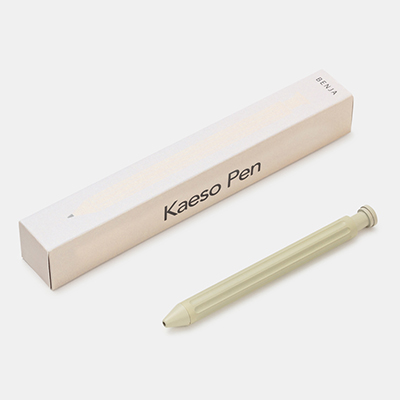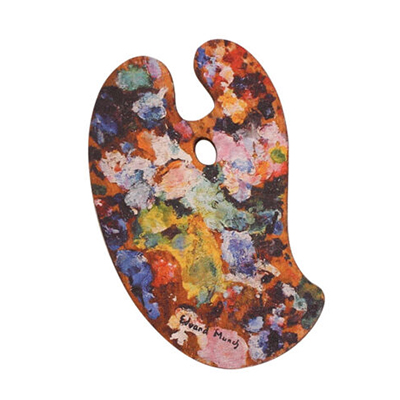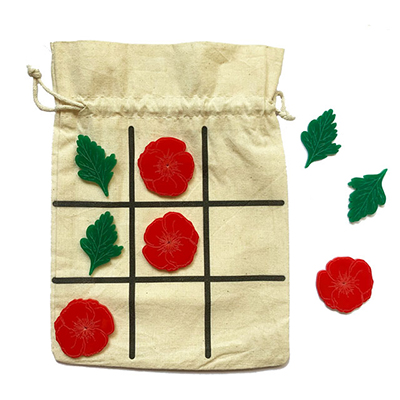
Cultural merchandising is not about simply “putting an image on a mug”. It is a process of translation: turning a curatorial discourse (ideas, values, historical context and the visitor experience) into a sellable object without betraying the museum’s educational mission. Specialist literature in museology and retail consistently shows that, when managed well, the museum shop can become an extension of the exhibition space and a channel for cultural dissemination, as well as a source of income
What is Cultural Merchandising?
Cultural merchandising is far more than souvenirs with logos. It results from applying strategies of applied art and meaningful design: pieces that are not only sold, but that also narrate, teach and extend the visitor’s experience. These objects respond to aesthetic, conceptual and pedagogical criteria derived from the exhibition’s content or from the museum’s identity.
Unlike generic products, cultural merchandising:
- communicates relevant narratives,
- has an educational or symbolic purpose,
- and is organically linked to the curatorial discourse.
In this way, a keyring or notebook ceases to be a casual object and instead becomes a piece with value associated with a specific cultural context.
The role of the museum shop
The museum shop is a strategic platform between the institution and the visitor. It is a space where knowledge and the exhibition experience can continue to “speak” after visitors leave the galleries. Yet its role goes beyond generating revenue: it acts as a cultural mediator that reinforces the impact of exhibitions and extends the museum’s presence in the visitor’s memory.
A well-conceived museum shop:
- reinforces the institution’s identity and mission,
- prolongs the learning experience,
- and turns each visitor into an ambassador for the exhibition.
From this perspective, the shop is not an isolated retail point but a communicative node within the museum’s overall narrative.
From exhibition content to object
The issue that most often confuses mixed teams (curatorial + retail) is this: curators work with theses, contexts and mediation; retail teams need product typologies, pricing, production and turnover. The solution is not to “simplify” the discourse but to translate it methodically.
This is precisely the approach advocated by Ming Productions in its own practice: starting from scratch, building narratives, and transforming “works of art and ideas” into merchandise.
Translating a curatorial discourse into a product is not an intuitive act but a clearly structured design process. Several key methodological steps are involved:
1. Mapping Curatorial Concepts
Extract the central themes, symbols and meanings of the exhibition.
2. Identifying Translation Opportunities
Determine which ideas can become functional, desirable objects that remain understandable for a broad audience.
3. Contextualising Without Diluting
Ensure that each product remains faithful to the museum’s content without becoming overly technical or inaccessible.
4. Building Narratives
Accompany objects with clear and engaging texts that allow audiences to connect product, content and experience. This methodological approach turns cultural product design into a discipline that integrates research, curatorship and industrial creativity.
This methodological approach turns cultural product design into a discipline that integrates research, curatorship and industrial creativity.
Design and Production Criteria
Not everything that is cultural is automatically sellable, and not everything that sells communicates value. For this reason, design and production criteria must balance curatorial intelligence with market expectations and product quality.
1. Conceptual Relevance
Each object should have a direct justification within the exhibition or the museum’s identity.
2. Material and Aesthetic Quality
The applied art within the product must align with the museum’s values: thoughtful material choices, careful execution and attractive design.
3. Functionality and Usability
A reusable museum object that is useful in everyday life prolongs the visitor’s relationship with the museum.
4. Sustainability
Choosing responsible materials and production processes reinforces the institution’s ethical stance and responds to contemporary expectations.
5. Scalability and Local Production
Assessing production capacity and collaborating with local artisans or suppliers can generate additional economic and cultural impact.
Through these criteria, merchandising ceases to be a superficial add-on and becomes a strategic component of the museum experience.
At a technical level, Ming Productions highlights common production techniques (such as screen printing, digital printing, laser engraving, heat transfer and pad printing), which are useful when deciding how elements of the narrative should be expressed through colour, texture, permanence or the perceived “nobility” of a finish.
Conclusion
Designing cultural merchandising is not a superficial exercise but a disciplined process of translation between curatorial content and physical object.
At Ming Productions, our experience in cultural product design and applied art positions us as facilitators between curatorial teams, retail directors and diverse audiences.
Understanding how to transform an exhibition into objects that inspire, educate and endure is both a strategic and methodological capability. If your museum wants to go beyond selling souvenirs and instead create lasting connections, designing purposeful museum objects must be central to your vision.
Our products